You didn’t have to be a cultural anthropologist to note the theme at UFC 267.
Of the six main-card fights on Saturday at the organization’s oddball non-pay-per-view, five were won by Russian fighters. Plus, there were three more wins by Russians during the prelims. In total, 10 of the 28 fighters who competed at UFC 267 hailed from Russia, which for all you mathletes out there meant that the event was 35.714 percent Russian overall. Eat your heart out, advanced analytic nerds.
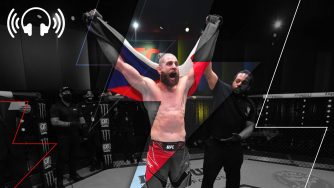
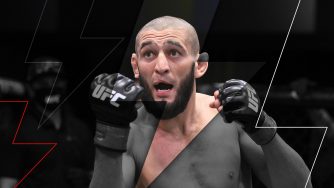
Petr Yan (hometown: Dudinka, Krasnoyarsk Krai) reasserted himself at men’s bantamweight, claiming the interim title with a scary-ass performance against Cory Sandhagen. Khamzat Chimaev (Beno-Yurt, Chechnya) and Islam Makhachev (Makhachkala, Dagestan) made their bones as real-deal contenders in the welter and lightweight divisions, respectively. Alexander Volkov (Moscow) out-dueled Marcin Tybura at heavyweight and Magomed Ankalaev (Makhachkala, Dagestan) put on a performance against Volkan Oezdemir in the newly wide-open light heavyweight division that should have you stroking your beard and muttering “interesting …”
On the undercard, Zubaira Tukhugov (Grozny, Chechen-Ingush ASSR), Tagir Ulanbekov (Makhachkala, Dagestan) and Albert Duraev (Volgograd, Russia) all nabbed victories (Duraev’s came, alas, over countryman Roman Kopylov [Novosibirsk, Siberia]). Only poor Shamil Gamzatov (Makhachkala, Dagestan) lost to a non-Russian, suffering a first-round TKO to Poland’s Michał Oleksiejczuk.
No other nation showed-out in such numbers. Because MMA, there were also six Brazilians on the card—and Glover Teixeira’s title win over Janny Blackjacks will likely be the lasting headline here—but it was clear this night was for flying the Trikolor flag. That’s the horizontal red, white and blue, if you nasty.
Much can be attributed to sheer geography, of course. UFC 267 went down in Abu Dhabi, which, especially during #EverythingThat’sBeenGoingOn, has been an important way-station for the organization’s international fighters. It’s also a popular vacation destination for Russian travelers, so if you’re looking to showcase some Russian fighters in front of a partisan Russian crowd, Abu Dhabi is the spot to do it.
(Editor’s note: Abu Dhabi is going to keep on being A Thing in the UFC for the foreseeable future, so it makes both good competitive and financial sense for the UFC to keep the pipeline of Russian fighters rolling. As of UFC 267, however, the promotion seemed to be making merely a halfhearted effort to get us all to continue calling the venue “Fight Island,” so at least that long nightmare might soon be over.)
Nothing about this new Russian wave will surprise hardcore MMA fans. If you hang around online and follow people like the inimitable Grabaka Hitman, then you already know there’s some kind of MMA event going on in Russia 24/7/365. These events typically feature seemingly unlimited rosters of fighters who all look like slightly different versions of the same dude beating the shit out of each other. Either that, or there’s, like, team obstacle courses and whatnot.
If watching that kind of stuff is your jam, then you’ve been predicting literally for years that the Russians were coming. There was always the sense that Khabib Nurmagomedov was just the tip of the spear and now that he’s retired to become more powerful than we could possibly imagine as a coach/promoter/frequent Dana White dinner date, the UFC is on the hunt for The Next Khabib™.
It’s no accident, then, that “Makhachkala, Dagestan” has already appeared in this article no fewer than three times. Hoo boy, those dudes can wrestle, am I right? But for a time the Great Russian UFC Takeover advanced at more of a trickle than a rush. But now, as the year of our lord 2021 prepares to draw to a close, here they are. The Russians are finally, fully at the gates.
And they brought numbers.
We know these things are cyclical. At least in the American MMA scene, the Brazilians broke through first and have stayed at the party ever since. Then White declared Canada the new Brazil. Then we forgot about Canada and Conor McGregor claimed the Irish weren’t just here to take part, they were here to take over. More recently, we’ve had a mini-influx of Australian/New Zealanders with the rise of City Kickboxing and champions Israel Adesanya and Alexander Volkanovski.
Now it feels like the Russians are about to take their turn, possibly in a way so dominant it’ll make McGregor’s quip about “taking over” look somewhat foolhardy.
And that’s cool, man. One of the most interesting things about MMA has always been its international flavor. There are a lot of different ways to skin this particular cat and half the fun is that there are such diverse philosophies on how to find successs. The Brazilian jiu-jitsu folks, for example, have largely gone about it with a much different attitude than, say, the American wrestlers.
Now we might be about to get a good, long look at the Russian way of doing things.
Of course, the Russians aren’t brand new to the party. Far from it. I don’t need to tell you guys about Mr. Fedor and Igor Zinoviev and the like. You already know. But most of those Russian legends did the bulk of their work outside the UFC.
Way back in the pioneer days, you had Oleg Taktarov do some good things—he placed second at the Ultimate Ultimate in 1995—and then went on to a nice career as an actor. You had a couple Belarusians like Andrei Arlovski and Vladimir Matyushenko being fairly major players, but Belarus split away from the USSR in the early ’90s, and I’d be very surprised if either of those guys would be super excited about any description of themselves as “Russian.”
(BTW, if you want to read the story of Matyushenko’s defection, check out this Josh Gross joint.)
Likewise, the UFC would obviously very much like to make Valentina Shevchenko a star in that part of the world but, again, Shevchenko is from Kyrgyzstan, which broke away from the Soviet Union around the same time as Belarus. Kyrgyzstan, in case you’re wondering, now has an incredibly dope flag.
But, honestly, there’s been surprisingly little purely Russian influence in the modern UFC until, I guess, right now. Khabib was the first UFC champion to (seemingly proudly) compete under the Russian flag, and he didn’t win gold until UFC 233 in 2018. So, if you count Khabib and Yan, that’s just two Russian champions in the entire modern history of the UFC.
That’s not very many! And maybe that’s why UFC 267 seemed like kind of a landmark event for Russian fighters in the world’s largest MMA promotion.
Because, brother, if you look at some of these guys who competed on Saturday, it’s pretty easy to imagine that the total number of Russian UFC champions is about to INCREASE. Maybe by a lot.
Nothing is a given, of course. Once-promising MMA careers can short circuit in a million fucking ways. But one of the things that sets this new Russian wave of fighters apart from previous contributions by those Canadians, Irish and New Zealanders, is the feeling that a whole BUNCH of these dudes are about to be a PROBLEM.
If you told me that we fast-forwarded a year or 18-months into the future and Yan, Chimaev, Makhachev and Ankalaev were all champions in their respective weight classes, I wouldn’t be surprised.
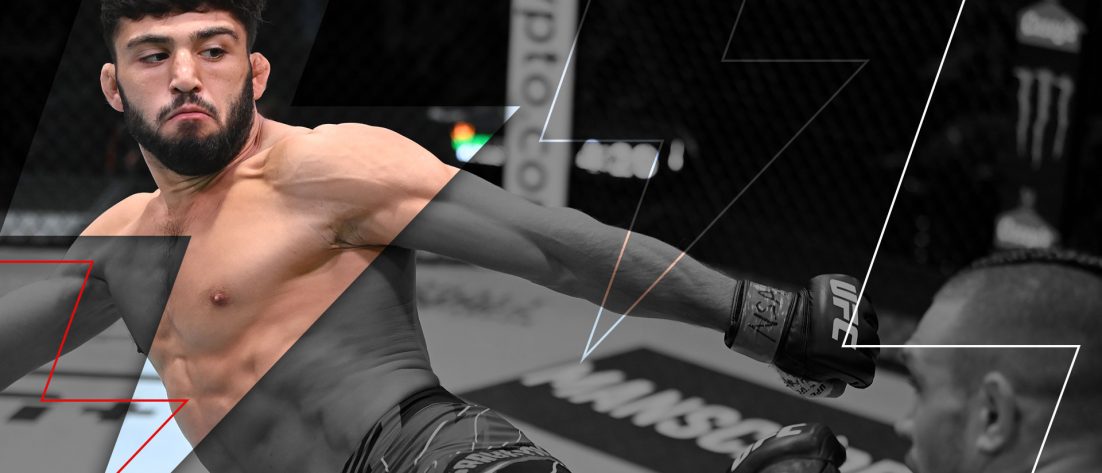
Oh, and all of this is to say nothing of dudes like Askar Askarov, the 14-0-1 flyweight who fought current champ Brandon Moreno to a draw in his UFC debut in 2019; Damir Ismagulov, the 9-0 lightweight with a four-fight UFC win-streak; Arman Tsarukyan (pictured above), the 17-2 lightweight who just beat the brakes off Christos Giagos in September; or Movsar Evloev, a 15-0 featherweight with five straight UFC wins.
And those are just the guys that I, an idiot (!), can name right off the top of my head.
In the end, the question may not be whether Russian fighters are about to become major players atop multiple UFC divisions, but exactly how Russian we can expect things to get around here.
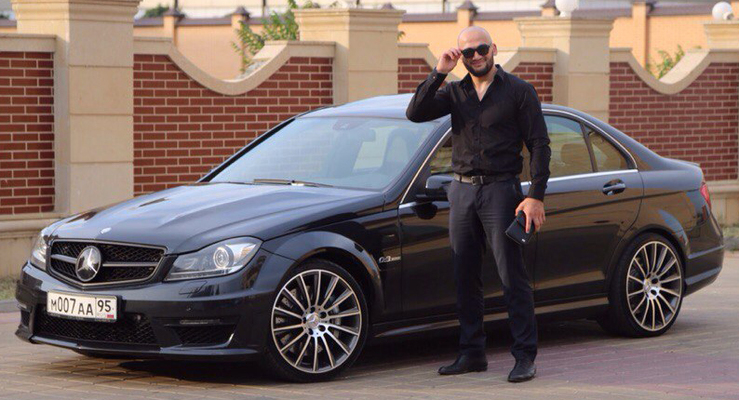
For a potential answer to that, I’m just going to leave you with this, a look at Albert Duraev’s current profile photo at Tapology:
(Lead photo by Jeff Bottari/Zuffa LLC)